
DNS Governance for Enterprise Domains, DNS, and TLS
DNS governance is the discipline of controlling how DNS records, zones, providers, permissions, approvals, changes, and audit evidence are managed across an enterprise.
For large organizations, DNS risk rarely originates as a purely technical problem. It usually begins with fragmented ownership, scattered providers, informal change processes, stale records, inconsistent controls, and limited visibility across domains, DNS, TLS, redirects, cloud services, and business units.
Authentic Web helps enterprises move from fragmented DNS administration to centralized, governed control, reducing recurring exposure, strengthening auditability, and improving operational efficiency.
DNS Risk Visibility Is Not Enough
Modern security tools are increasingly effective at finding DNS exposure. EASM, CTEM, posture management tools, and scanning platforms can identify dangling CNAMEs, missing DNSSEC, incomplete SPF or DMARC records, insecure redirects, missing HTTPS, and other externally visible conditions.
What they cannot do is govern the operating model that created the exposure.
A scanner can identify an orphaned record today. Without governance, another orphaned record appears tomorrow.
Visibility identifies exposure. Governance prevents recurrence.
DNS governance turns DNS risk management from a repetitive cleanup exercise into a controlled operating discipline.
Why DNS Has Become an Enterprise Governance Issue
DNS has evolved from a network service into shared enterprise infrastructure. Every major business function now creates, changes, or depends on DNS.
Infrastructure. Security. Cloud. Marketing. DevOps. M&A.
Without centralized governance, no single team owns the whole operating model.
Common symptoms include:
- DNS zones managed across multiple providers and business units
- Production changes made through informal requests or provider consoles
- Stale records pointing to retired vendors or invalid destinations
- Dangling CNAMEs and orphaned records recurring after remediation
- Missing or misconfigured DNSSEC, DKIM, SPF, or DMARC records
- Redirects that are insecure, unmanaged, or pointing nowhere
- Unclear ownership for domains, zones, records, and changes
- Limited audit history showing who approved critical DNS edits
What DNS Governance Includes
Governance is built from six operational disciplines.
Define accountable ownership for domains, DNS zones, records, providers, redirects, certificates, and critical change decisions.

Route DNS changes through defined approval workflows so every edit is authorized, validated, and traceable.

Apply consistent DNS, TLS, and redirect policies across teams, providers, and business units, with exceptions tracked rather than ignored.

Maintain a reliable view of domains, zones, records, providers, dependencies, externally visible conditions, and known areas of exposure.

Preserve evidence of ownership, approvals, changes, exceptions, remediation activity, and compliance with enterprise standards.

Connect DNS creation, update, and decommissioning to cloud, application, marketing, M&A, and vendor lifecycle processes.

DNS Governance vs. DNS Security Monitoring
Monitoring answers: What is wrong?
Governance answers: Why did it happen, who owns it, and how do we prevent it from happening again?
In other words:
DNS monitoring finds the symptom. DNS governance changes the operating model.
Enterprises need both. Visibility helps teams understand today’s risk. Governance helps ensure tomorrow’s DNS changes do not recreate the same risk.
The DNS Governance Maturity Path
Ad Hoc
DNS is spread across teams, providers, and legacy environments. Inventory is incomplete, changes are inconsistent, and audit evidence is limited.
Visible
Domains, DNS zones, providers, and common exposures are increasingly known, but ownership, approvals, and change evidence remain inconsistent.
Controlled
Ownership, permissions, approvals, logging, and periodic reviews are documented and repeatable.
Governed
Policies are enforced consistently, exceptions are tracked, and DNS changes are managed through defined workflows.
Evidence-Ready
DNS is continuously inventoried, monitored, reviewed, and mapped to audit, security, and operational requirements.
Prove ownership, demonstrate control, and deliver evidence.

Five DNS Governance Questions for Enterprise Teams
Before your next risk, infrastructure, or compliance review, ask:
- 1.
Do we know every registrar and DNS provider operating across our enterprise footprint?
- 2.
Do we have accountable ownership for every critical domain, DNS zone, and record set?
- 3.
Can we show who approved the last production DNS change across each provider?
- 4.
Are DNS record creation and decommissioning tied to application, cloud, vendor, and marketing lifecycle processes?
- 5.
Can we produce evidence that DNS controls are enforced consistently across teams and business units?
If these questions cannot be answered confidently, your organization probably has a DNS governance gap—not simply a visibility gap.
Why Fragmentation Creates DNS Risk
DNS governance rarely fails overnight. It erodes gradually as new providers, cloud services, acquisitions, vendors, and business units introduce change faster than governance evolves.
A marketing team creates a campaign domain. A regional office uses a local registrar. A cloud team creates a temporary service. A vendor configures a redirect. An acquired company brings legacy DNS zones. An application is retired, but the DNS record remains active. A DNS change is made quickly to solve an urgent issue, but the change is never documented properly.
Over time, DNS becomes a shared dependency without a shared control system.
DNS governance solves this by creating one governed operating model for DNS visibility, ownership, policy, workflow, and evidence.
How Authentic Web Helps
Organizations typically need to:
- Inventory domains, DNS, and TLS
- Establish ownership
- Standardize workflow
- Consolidate providers
- Enforce policy
- Maintain evidence
Authentic Web provides the platform and methodology to operationalize those capabilities.
Our approach can include:
- Domain, DNS, and TLS inventory development
- DNS exposure and stale-record review
- Registrar and DNS-provider consolidation planning
- DNSSEC, DKIM, SPF, DMARC, HTTPS, and redirect review
- Ownership, access, and workflow cleanup
- Policy-driven change management, auditability, and reporting
DNAM, Authentic Web’s Domain Name Asset Manager, provides the governed system of record for domains, DNS, and TLS. It helps enterprise teams apply hierarchical permissions, route changes through controlled workflows, enforce policy, preserve audit history, and reduce the likelihood that DNS risk keeps recurring.
The goal is not only to find DNS problems faster — it’s to establish an operating model that makes the same problems less likely to return.
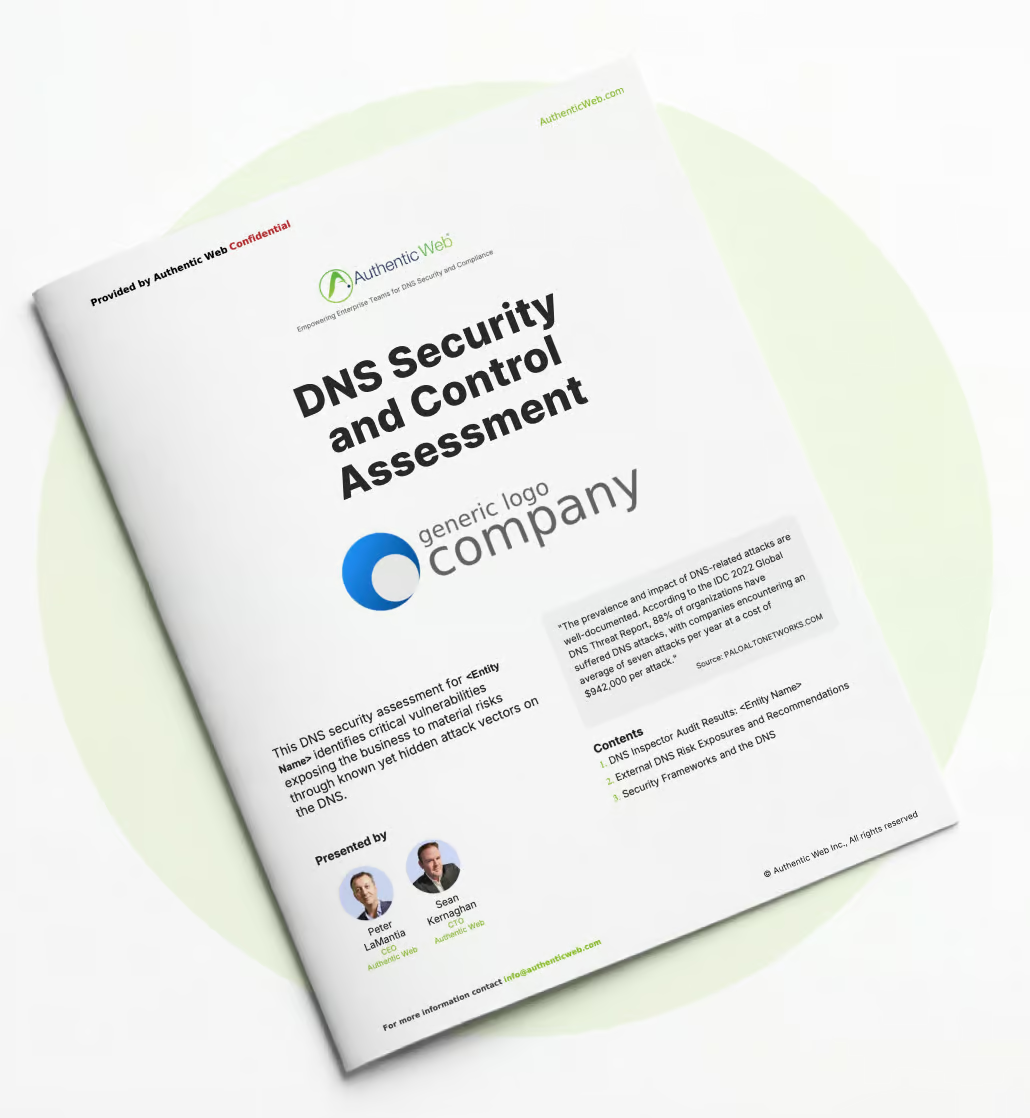
Start With a Domain & DNS Control Assessment
Before you can improve DNS governance, you need a clear view of externally visible conditions that may indicate hidden risk.
FAQ
Common questions about DNS governance for enterprise teams.
DNS governance is the operational discipline of controlling DNS ownership, policies, permissions, approvals, changes, validation, monitoring, and audit evidence across an enterprise.
DNS governance helps reduce recurring DNS exposure by ensuring that DNS records, providers, permissions, workflows, and changes are managed through a consistent control model.
DNS monitoring identifies exposed or misconfigured DNS conditions. DNS governance establishes the ownership, policy, workflow, and audit controls needed to correct issues and reduce recurrence.
Common signs include multiple DNS providers, unclear ownership, informal DNS change requests, stale records, dangling CNAMEs, missing DNSSEC or email-authentication records, unmanaged redirects, and limited audit history.
The first step is to assess the current environment: identify externally visible DNS conditions, provider sprawl, stale or orphaned records, DNSSEC and email-authentication gaps, HTTPS and redirect issues, and priority areas for remediation.