

Finding DNS Risk Is the Start.
Preventing DNS Risk Is the Goal.
Earlier this year, a researcher demonstrated how a forgotten DNS record at Anthropic could have been weaponized to hijack user authentication. The subdomain was dangling. The cloud resource was unclaimed. The fix was trivial. The governance oversight was not. (Source)
Every cloud deployment, M&A integration, and AI initiative expands the external DNS footprint. For CISOs, Infrastructure, and Compliance Officers, this growth creates a shared vulnerability: External DNS Attack Surface Risk.
Modern enterprises struggle because they cannot consistently enforce ownership, policy and operational controls across thousands of domains, zones, providers and cloud teams.
Enterprises are realizing that discovery without governance creates an infinite loop of remediation.
Infrastructure teams know that DNS is no longer just another network service. It has become the operational control plane connecting cloud, identity, applications and certificates. They have all experienced how important it is, how DNS goes wrong and creates workload, for example:
- A scanner flags a dangling CNAME. SecOps remediates it. Next week, a dev team spins up a new cloud instance, and the issue returns.
- An M&A deal closes, absorbing hundreds of unmanaged DNS zones across legacy providers.
In the era of automated threat scanning and AI-driven exploitation, discovery alone is not enough and too slow. The imperative for enterprise leadership is clear: Move from passive DNS posture monitoring to active, enforceable DNS governance to establish a pre-emptive DNS security posture.
Governance creates continuously available evidence that controls are functioning as intended.
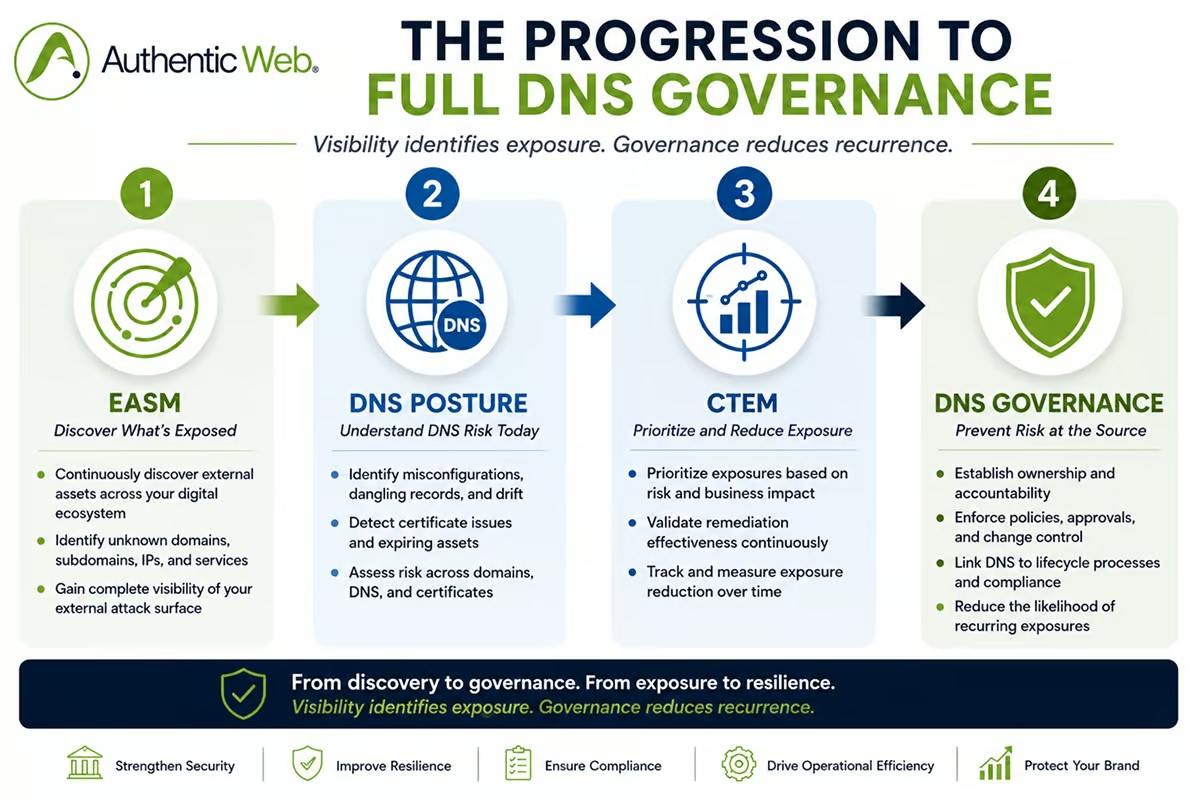
Achieving Full DNS Attack Surface Governance
DNS Is Now Strategic Critical Infrastructure
– Not Just a Network Service
The National Institute of Standards and Technology (NIST SP 800-81r3) explicitly reinforces the enterprise reality:
“The DNS is an integral part of any enterprise network architecture. An attack against the DNS infrastructure of an enterprise threatens every network operation in that enterprise.”
“It’s not just DNSSEC… but better DNS hygiene around making sure that you don’t have names or subdomains that are just dangling out in the ether, because those have been exploited.”
– Chris Usserman, Infoblox, on NIST SP 800-81r3
“DNS is no longer just a back-end utility; it’s now frontline in the battle for cloud security.” Forrester Research
“In 2026, organizations that prioritize security investments based on a continuous exposure management program will be three times less likely to suffer a breach.”
– Gartner
DNS now underpins digital identity, cloud infrastructure, customer applications, email, AI services and regulatory compliance. The importance of DNS is not disputed. The strategic challenge lies in establishing cross-functional operational governance over it.
Visibility Finds Problems. Governance Eliminates Causes
Visibility shows risk today. Governance determines whether you’ll have the same risk tomorrow.
Modern security programs increasingly use EASM, CTEM and posture management to continuously discover and validate cyber exposure. While these capabilities are essential, they answer only part of the problem.
Consider a standard operational scenario: An EASM tool flags an orphaned host record vulnerable to subdomain takeover. SecOps files a ticket, and the record is removed. Two days later, a cloud resource is deprovisioned without updating DNS, recreating the exact same exposure. Automated threat bots discover the dangling CNAME before SecOps can process the next scan report.
The root failure was not visibility. It was operational governance:
- Unclear Domain Ownership: No single operational owner for the root domain or zone.
- Disconnected Lifecycle: Cloud assets decommissioned without deleting DNS configurations.
- Fragmented Access Controls: Multiple departments making production DNS edits outside centralized change control.
- Audit Blindspots: No centralized system proving compliance controls were enforced.
Posture management highlights the symptom. Governance addresses the systemic workflow failure.
The consequences extend well beyond cybersecurity. Poor governance has impacts. It increases recurring vulnerabilities and operational costs across engineering and compliance.
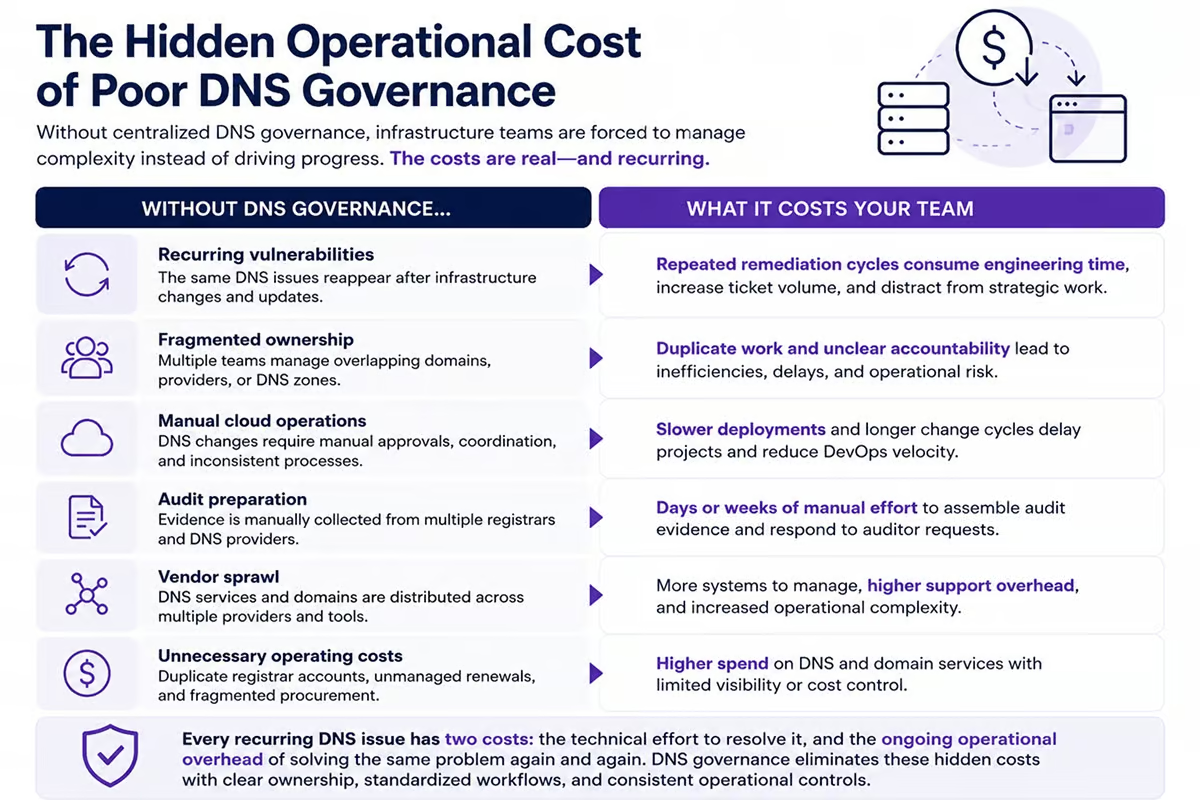
Governance Completes the DNS Security Stack
To stop recurring risk, enterprise infrastructure, security, and risk leaders must integrate visibility and governance into a unified operating model.
| Capability | Primary Question | Common Gap |
|---|---|---|
| External Attack Surface Management (EASM) | What external assets exist? | Discovers unknown assets without ownership. |
| DNS Posture Management | What DNS misconfigurations exist? | Findings repeat because lifecycle isn’t automated. Active vulnerabilities and weak hygiene. |
| Continuous Threat Exposure Mgmt (CTEM) | Which exposures are business critical? | Risk scoring ignores DNS-specific context. |
| DNS Governance | How do we prevent recurrence? | No centralized policy enforcement across providers. |
Each capability strengthens the other. Visibility without governance leads to recurring and persisting risk. Full governance transforms continuous discovery into continuous operational improvement.
The Core Operational Challenge:
“DNS Belongs to Everyone (and No One)”
The fundamental reason DNS risks persist in large enterprises comes down to operational fragmentation:
- Infrastructure manages core enterprise DNS services.
- InfoSec monitors external attack surfaces and compliance frameworks.
- Cloud & DevOps programmatically generate zones, subdomains, and CNAMEs.
- Marketing & Business Units register external campaign domains across rogue registrars.
When accountability is distributed across siloed teams without centralized tooling, scanner reports become operational noise. You can buy the best EASM and CTEM platforms on the market, but without centralized policy enforcement and change control, technical debt will outpace remediation every time.
Five Strategic Questions for the Leadership Team
As we’ve worked with enterprise organizations, we’ve found that governance maturity often comes down to answering a few simple questions. Before your next risk or infrastructure review, bring these five questions to your leadership team:
| Subject | Question | Score Yourself |
|---|---|---|
| Ownership | Do we have a verified, single point of organizational ownership for every registered domain and zone? | Yes | No |
| Auditability | Can we produce a change log showing who authorized the last production DNS edit across every provider? | Yes | No |
| Vendor Sprawl | Do we know all registrars and third-party DNS providers operating across our global ecosystem? Are they governed? | Yes | No |
| Policy Enforcement | Are DNS record creations and decommissions tied directly to automated ITSM and cloud lifecycle workflows? | Yes | No |
| Compliance Readiness | Can we demonstrate real-time DNS control enforcement with verifiable data during a regulatory audit? (SOC 2 CC6.1, ISO 27001 A.13.1, DORA ICT asset inventory) | Yes | No |
These aren’t infrastructure or security questions; they are governance questions.
Organizations that answer “Yes” experience fewer DNS-related issues and incidents, not because they have better scanning, but because they operate more deliberately.
If you hear your team frequently say “It’s always DNS,” it is not a running IT joke, it is a clear operational signal that your organization lacks DNS Governance.
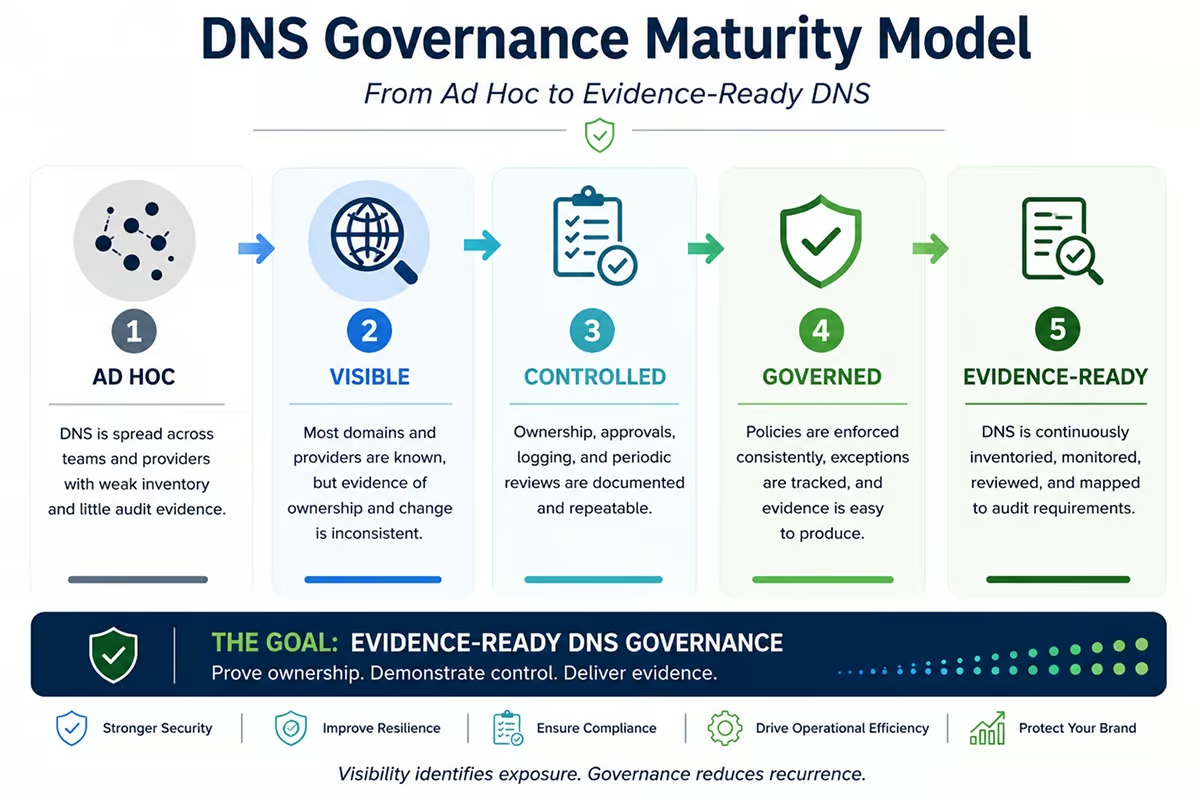
Building Your DNS Maturity Roadmap
Achieving complete DNS governance is a structured journey. Explore our recent articles and videos to dive deeper and fully understand this area.
Your External DNS Attack Surface Is Larger Than You Think
Understanding how multi-cloud expansion expands external attack surfaces.
External DNS Is an Under-Managed Attack Surface
Why DNS frequently bypasses traditional enterprise security architectures.
Who Owns Your DNS End-to-End? (Probably Nobody.)
Tackling cross-departmental silos and fragmented accountability.
DNS Consolidation vs. the Status Quo
How consolidating registrars and DNS providers drastically lowers operational risk.
How to Establish Governance and Compliance Readiness on the External DNS Attack Surface
Actionable steps to make your DNS architecture audit-ready and compliant.
Together, these articles tell a broader but simple story on the path to DNS management maturity.
Subscribe to our LinkedIn Newsletter to receive more information on DNS security and compliance as new editions are published.
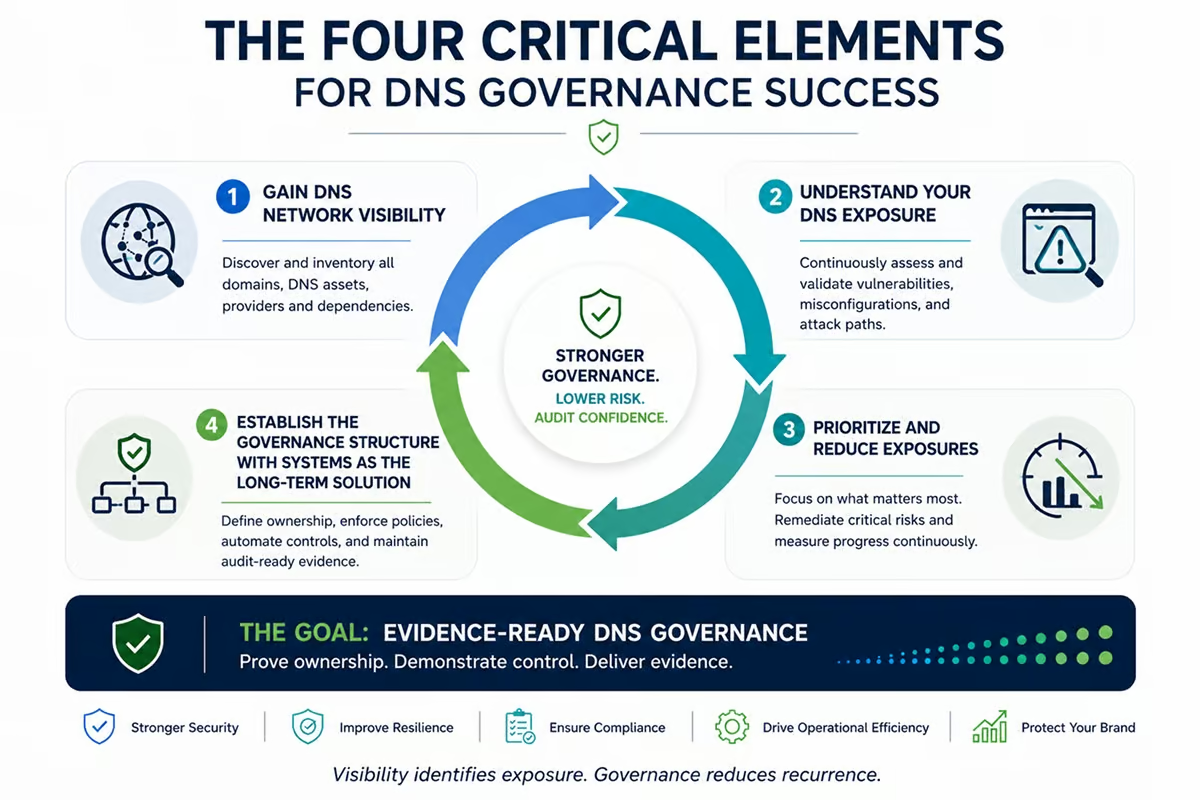
Final Takeaways
Enterprise DNS resilience is no longer an alert-management exercise. It is an operational discipline.
Organizations that combine continuous discovery with operational accountability won’t simply reduce DNS risk; they’ll build more resilient digital businesses and reduce operating costs.
The goal isn’t to discover the same DNS vulnerability faster. The goal is to build an operating and governance model that makes it increasingly unlikely to occur at all.
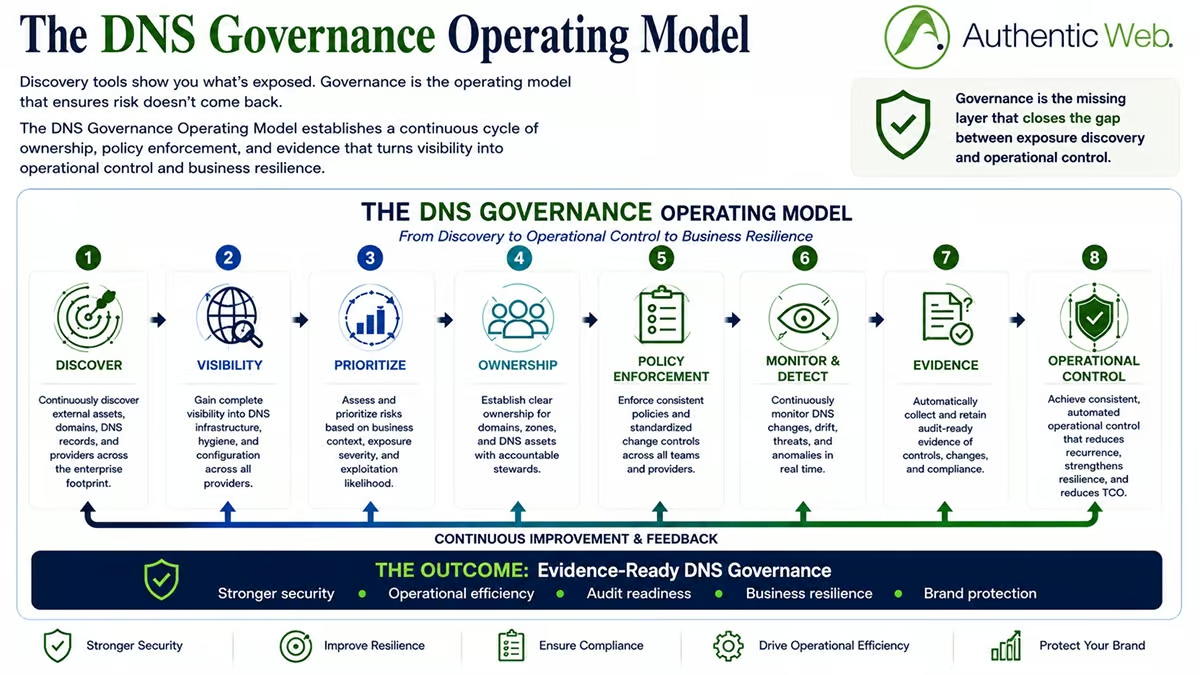
Where does your org rank on DNS governance maturity?
Authentic Web’s DNAM platform, including our DNS Inspector service, unifies all four pillars of the DNS maturity stack into a single platform.
If your organization is ready to move from reactive remediation to proactive governance, the first step is a baseline control assessment. Authentic Web can provide a complimentary Domain & DNS Control Assessment to identify externally visible DNS, domain, TLS, email-authentication, redirect, and provider conditions that may indicate hidden governance, ownership, or change-control risk.
Request your complimentary Enterprise DNS Control Assessment.